
The Hidden Protein Crisis: What Really Causes Insulin Cells to Fail in Diabetes
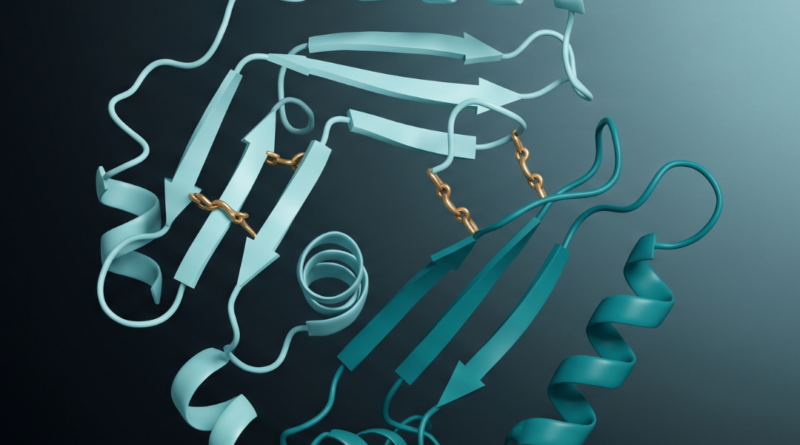
Much like a piece of paper must be folded into a precise origami sculpture to take shape, proteins inside our cells must fold into specific three-dimensional structures to function. When this delicate process breaks down, it can quietly drive the progression of diabetes.
As prediabetes advances, the body demands more insulin to keep blood sugar in check. This forces the pancreas’s insulin-producing beta cells into overdrive. However, when the precursor protein to insulin—called proinsulin—is rushed or improperly folded, it accumulates inside the cells. This buildup of defective proteins creates cellular stress that ultimately damages and destroys the beta cells.
The “Doubles Match” of Protein Folding
While scientists knew that misfolded proinsulin caused beta cell damage, the exact mechanics of how cells try to manage this process were unclear. In a June 2026 study published in the Proceedings of the National Academy of Sciences, researchers from Sanford Burnham Prebys and the University of Michigan uncovered the cellular machinery responsible for keeping insulin production on track.
By genetically tagging proteins in the beta cells of mice, the researchers tracked a primary “chaperone” protein called BiP, which oversees proinsulin folding. They discovered that BiP cannot work alone—it relies heavily on a partner protein called p58IPK.
When researchers genetically removed this partner protein, the entire system began to fail. Without p58IPK, misfolded proinsulin quickly accumulated, and the beta cells ultimately produced significantly less insulin.
The experiments proved that these two proteins must work as a unified team. When researchers restored p58IPK to the cells, the folding process was successfully fixed, but this recovery only occurred if BiP was also present.
Furthermore, the primary chaperone BiP cannot simply overcompensate for the absence of its partner. When researchers forced the cells to produce extra BiP to make up for a lack of p58IPK, they observed only modest improvements in protein folding, proving the necessity of the partnership.
“Like a single tennis player trying to play a doubles match, we found that BiP cannot just go it alone in maintaining the proper folding of proinsulin,” explained Dr. Insook Jang, the study’s lead author.
A New Horizon for Diabetes Treatment
Currently, most diabetes medications focus on symptom management: they help the body absorb more glucose or force the pancreas to pump out more insulin. None of the existing therapies actually address the root protein-folding problems that cause beta cells to fail in the first place.
By identifying the exact partnership between BiP and p58IPK, researchers have uncovered a potential new target for drug development.
Dr. Randal J. Kaufman, senior author of the study, notes that learning how to influence and strengthen this specific protein-folding system could lead to therapies that intervene early in the disease process. Instead of just managing blood sugar, future treatments could directly protect the pancreas, preserving the health of beta cells before they are damaged beyond repair.
Source: Science Daily | July 28, 2026